Day 117: Billie Holiday – Lady Sings the Blues
I was listening to the radio the other day and heard a Billie Holiday song and realised I haven’t heard enough songs by her, so what better way to spend my boxing day than to give her a proper listen. The radio is such an underutilised treasure trove, both for music discovery and shows. And there’s true gems to be found: I just saw that there’s a programme where Pulp’s Jarvis Cocker, a man who surely originated the “I hardly know her!” joke format, reads the Shipping Forecast to ocean sounds and ambient music in order to help you sleep. Mental! You don’t get that on TikTok.
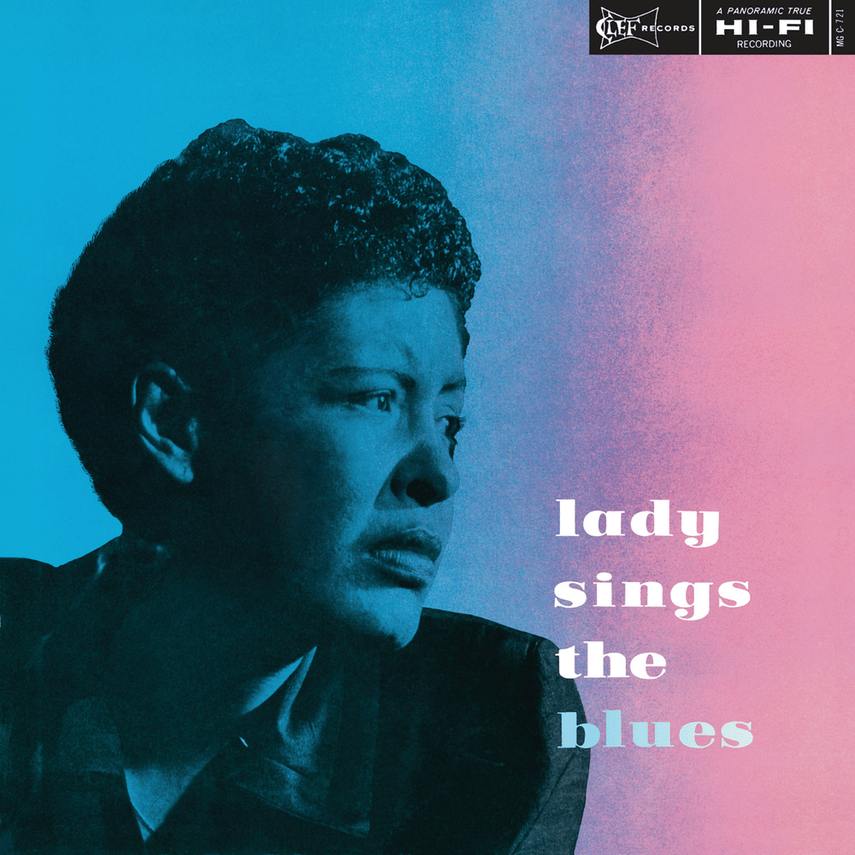
Album cover courtesy of Clef Records
Billie Holiday was an American jazz and swing singer who lived between 1915 and 1959. She had a very difficult life, as she was abandoned by her father and her mother was frequently absent. She was abused as a child and sent to a Catholic reform school, where she was traumatised further. The nuns reportedly locked her in a room with a dead body overnight to punish her for misbehaving. At 11, she dropped out of school and not much later, she was working in a brothel. She was arrested for prostitution at 14.
As an adult, she struggled with drug and alcohol addiction, which was worsened by persecution she faced from the Federal Bureau of Narcotics. Then-acting FBN director was convinced that she was a subversive threat due to one of the songs on this album, “Strange Fruit”, which is about lynchings, the strange fruits being bodies hanging from trees in the South. But the issue wasn’t just that she sang that song, they also too resented her for being a wealthy Black woman with power who wasn’t afraid to speak out:
Holiday flaunted her wealth. She dressed well. She had white friends and business associates who worked for her. She travelled. If she didn’t agree with something artistically, she spoke up. Holiday was a public figure who was bold and unbothered. She was starting to use her fame to protest violence and challenge systematic racism. To do that as a Black woman in the 1930s and ’40s was unheard of. Harry Anslinger believed she was setting a bad example, so he assigned an undercover agent named Jimmy Fletcher to track her moves and eventually set her up …
It took at least three raids, two undercover agents, planted drug evidence, multiple arrests, associates who became paid informants, blocked access to lawyers and medical care, a prison sentence, the loss of her cabaret license (required to perform at the time), and two court cases for Anslinger to corner Holiday. And yet, despite the federal witch hunt, she would not stop singing “Strange Fruit.”
It’s a harrowing, sad thing to read about. She was so incredibly talented. It’s sad to think what she could have done with her life, had she been left alone by the FBN. Frankly, with the childhood she had, who wouldn’t struggle with substance abuse? She had to represent herself in court on drug charges as her lawyer didn’t show up, and she asked the courts for help to manage her addictions, but they sent her to prison instead.
Her voice is deep, soulful and beautiful. With the life she had, it’s no wonder she was able to convey emotions in a way that sounds rare, it’s hard not to be touched by her singing. Songs like “I Thought About You” and the aforementioned “Strange Fruit” where she taps into the sadder emotions are where she really shines. She struggled with singing “Strange Fruit” as it reminded her of the death of her father, who was denied lifechanging medical treatment because of his race. She still stipulated in her contract that she was to sing it at every performance.
Lady Sings the Blues is a stunningly beautiful album. The songs themselves aren’t that sad, it’s more the story behind it and hearing the potential of what could have been that makes for a depressing listening experience – empathy, effective treatment for her afflictions and a long, healthy life making music. Instead, she was a generational talent who was hunted and killed by because of racism.
The FBN director’s response to drug offences relied entirely on race: he went to personally visit another heroin addict, Judy Garland, and wrote a letter vouching for her and urged her to manage stress by taking more time off. With another white society woman, he refused to arrest her, so as not to affect her reputation. And he wasn’t exactly hiding that he viewed addiction as a symptom of issues with stress management for white people but a collective moral failure from black people, saying:
“the increase [in drug addiction] is practically 100 percent among Negro people … the Negro population … accounts for 10 percent of the total population, but 60 percent of the addicts.”
While she was in the hospital, the police came to arrest her for drug possession. They knew they couldn’t arrest someone who was critically ill, so they got the hospital to remove her from the critical list. They handcuffed her to the bed and had police officers stationed at her hospital room. She had been getting better as she was put on methadone, so they decided to stop the methadone treatment. After she died, Anslinger congratulated himself of a successful mission by writing that for Billie Holiday, “there would be no more ‘Good Morning Heartache.’”
Absolute rat bastard. At least he’s been burning in the fiery pits for a good few decades. The album itself is a very strong 8.5/10. I should be at an age where racism doesn’t shock me or I don’t get surprised when reading about it, but this was terrible.