Day 269: Os Mutantes – Os Mutantes
What time is it? It’s Brazilian psychedelic mutant music time. I didn’t know that time existed up until about an hour ago, but here we are. I’ve got nothing more interesting to say than what I can say about this band, because they’re a bit of a doozy – let’s get straight into it.
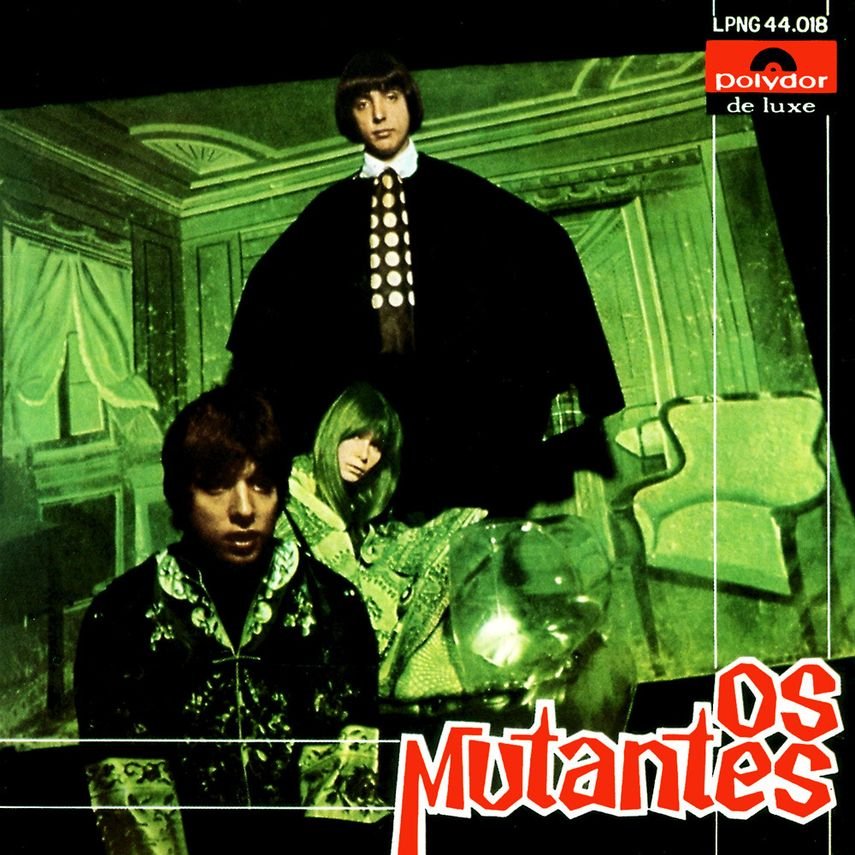
Album cover courtesy of Polydor
Os Mutantes was formed in 1966 in Sao Paolo by brothers Arnaldo Baptista and Sérgio Dias Baptista, as well as Arnaldo’s girlfriend Rita Lee. The brothers met Rita Lee when they were all making rounds on talent shows, where Arnaldo offered to give her lessons on playing bass. They started a band called O’Seis together, and Sérgio joined them at only thirteen years old. They hanged their name to Os Mutantes, with the name taken from their favourite sci-fi book.
The trio ended up getting a slot on a TV show playing rock covers and started gaining popularity with their televised sets. Then they met Gilberto Gil and Caetano Veloso, two influential Tropicália musicians who made the group a part of the movement. Tropicália was a political and artistic movement that melded international avant-garde with more traditional Brazilian influences, focused on something they called Cultural Cannibalism, or taking foreign influences like American psychedelia or British pop and making them your own.
As the public faces of a political movement under a military dictatorship, Gil and Veloso were arrested and exiled to Britain between 1969 and 1972, leaving Os Mutantes to lead the revolution. While they avoided arrest, it was a difficult time for them too, as described by Sérgio Dias Baptista:
“When we were kids, we faced a lot of serious repression, and we were under a severe military government—a lot of people being killed, a lot of people tortured. It was heavy, very heavy. And nasty. But when you are a kid, you have this thing, this war inside, this delight of going against whoever says that you can’t. And we were damn lucky that they didn’t arrest us or torture us or do anything like that, because we probably would have lost faith.”
Their self-titled debut album was released in 1968, and while it didn’t make that much of a splash internationally when it first came out, it has since cemented its place as one of the best psychedelic records that came out of the ‘60s. It’s about as interesting of an album that you can imagine listening to, even without understanding what they’re saying at all.
What’s most fun about it is that it’s definitely more out there than its English-speaking counterparts, albeit with some more familiar features: the album has a translated Mamas and the Papas song ( “Tempo No Tempo”) and a version of Françoise Hardy’s “Le Premier Bonheur Du Jour” where they replaced the sound of the hi-hat by spraying bug spray towards the microphone.
I’m the first to admit that I have shamefully little knowledge about Brazilian music, but at least to me, these guys sound like true originals. I can’t think of anything like them – I can hear the influences that I recognise, but it’s cannibalistically put together in a way where it makes something that I’ve never heard before. I’m a huge fan. They also fall into a category that I’m really starting to love, along with previous blog favourites like Suicide and the Jesus and Mary Chain: one time their live performance incited violence when spectators didn’t understand what they were seeing or hearing. The audience jeered, heckled and turned their backs on the band, but also threw objects and food at them — that’s how you know it’s good.
Youngsters protesting an oppressive government with avant-garde music is the sort of spirit which I hope will make a comeback soon. I think it’s tedious to listen to people complain about Kids These Days, but today’s ultra-conservative teens do drugs to get better at school and try to shame weirdos by posting shortform content about them in hopes of going viral – strange little puritans. I hope the youths start doing something interesting soon. Anyway, Os Mutantes are great and I need to research Tropicália, Os Mutantes gets a 9/10.
Also, fun fact: the imprisoned and exiled Gilberto Gil later ended up becoming Brazil’s Minister of Culture.