Day 398: Dorothy Ashby – Afro-Harping
I’m in the mood for something jazzy today, but not necessarily the sort of jazz I have to think about. I want something nice and mellow, not so mellow that I don’t notice it but also not the kind of music that requires me to think, I just don’t have that in me at the moment. So I thought I’d try an album from the ground-breaking harpist Dorothy Ashby.
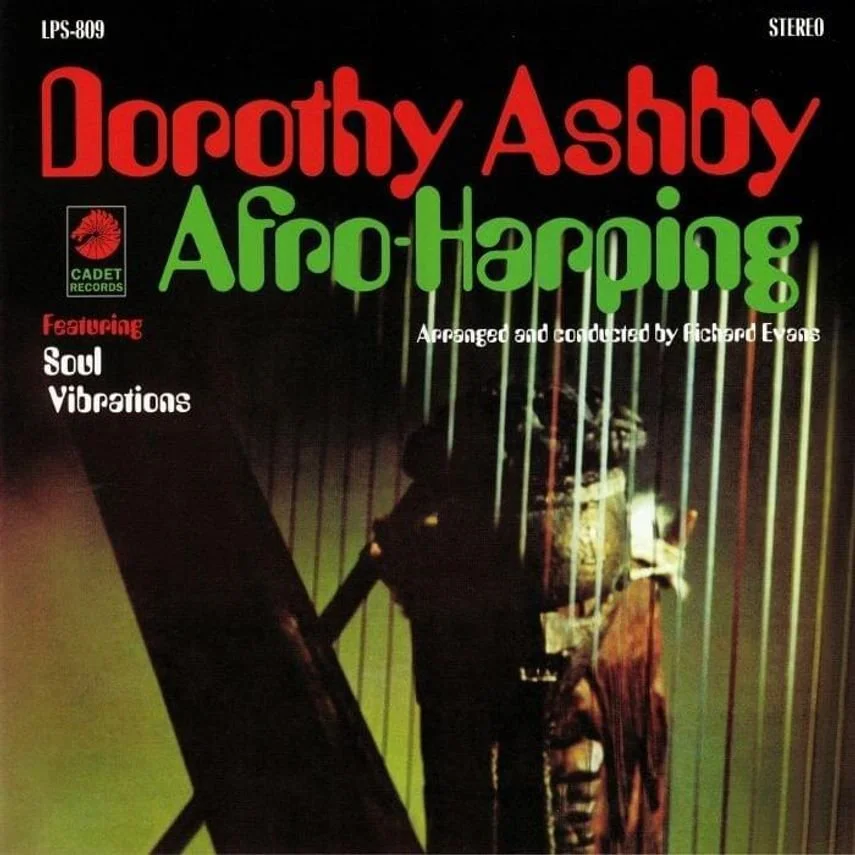
Album cover courtesy of Cadet
Dorothy Ashby was a jazz harpist, singer and composer from Detroit, Michigan. She was born in 1932 to a musical family, with her father being a jazz guitarist, and she often accompanied him and his friends on the piano. She discovered the harp when she was in high school, but she continued to play piano and majored in piano and music education at university, but she switched to harp as her primary instrument by 1952.
Afro-Harping was released in 1968 as Dorothy Ashby’s sixth studio album, and it features her with an uncredited orchestra, arranged by Richard Evans. It was the first album she released under her new contract with Chess subsidiary Cadet Records, and the first one she’d worked on with Evans. It’s an album of wide-ranging influences as a soulful, funk-infused cinematic jazz album that’s easy to access and instantly enjoyable.
This album has such an undeniably ‘60s cocktail party sound to it that I figured it had to have featured on the soundtrack of Mad Men, and it has. It also features a cover of the theme from Valley of the Dolls, which is so fun, I love that she was covering songs from popular culture. As a sidenote, that film is bonkers – I spent the first half wondering why people call it camp melodrama and then the wheels came well and truly off. The album also features a cover of “The Look of Love” by Dusty Springifield.
My favourite thing about Afro-Harping is that it’s an album that clearly doesn’t take itself too seriously or require you to know jazz in order for you to understand it – it’s jazz, but not the inaccessibly, hoity-toity kind, it’s the kind that anyone with taste can enjoy. And yet it still pushes the envelope. She embraced different genres and influences, including ones that a jazz artist traditionally wouldn’t embrace, which landed her working with mainstream artists like Bill Withers, Stevie Wonder, Bobby Womack and Minnie Riperton.
And today, her work has lived on in popular culture by becoming a frequently sampled album in hip-hop, with artists like Pete Rock & C.L. Smooth, GZA, Mac Miller and Wiz Khalifa having sampled songs from Afro-Harping.
If there’s one word I’d describe this album with, I’d say it’s elegant. It’s the perfect album to have on in the background when you want to spice up an everyday activity with something that’s not too background-y but also doesn’t command so much attention that it’ll distract you. I’d imagine this would be the perfect album to have on while running errands or pottering around the house just to bring a touch of sophistication to doing something otherwise mundane.
I’m sure I’ll have this on again in the future, it’s the perfect everyday accompaniment. Afro-Harping gets an 8.5/10.