Day 78: Chavela Vargas – Chavela Vargas
Fun day today, I’m going for something that’s completely new to me and I get to research an interesting person. I was listening to an episode of BBC’s Desert Island Discs with Marina Abramović, where she spoke about the artist Chavela Vargas, who I hadn’t heard of before. I’m currently trying to incorporate more Spanish-speaking music into my life because I’m at a 700-day Duolingo streak and yet I can barely say hello, so Chavela Vargas is my choice for today.
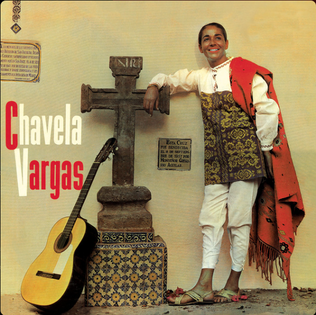
Album cover courtesy of RCA Records
Chavela Vargas was born in 1919 in Costa Rica. She moved to Mexico when she was 17 to pursue a career in music, and she spent the ‘40s and ‘50s within the artistic scene in Mexico City, singing as a street performer. She was a free spirit through and through, she would sing love songs to women on stage wearing trousers and a poncho, and was known as a gun-slinging, tequila-chugging seducer of women. She had a long relationship with Frieda Kahlo and had an affair with Ava Gardner.
Vargas sang her own version of ranchera music, a traditional Mexican genre of music that is named after the ranches in rural Mexico where the music originated from. It gained popularity after the Mexican Revolution between 1910 and 1920, and the increased national spirit after the revolution helped propel it into being the most popular genre of Mexican music by the 1950s.
Ranchera is traditionally sung from a man’s perspective and with a mariachi band backing, but Vargas made it her own by slowing it down and singing it accompanied only by a guitar. It’s also traditionally sung from a man’s point of view. Vargas sang it like that, too. She didn’t publicly come out as a lesbian until she was in her 80s, but she never hid it, either.
Vargas’ self-titled album was released in 1961, and it features some of her biggest songs, such as "La Llorona" and "Paloma Negra”. Having never listened to her before, it’s an experience. Her voice is so full of passion that you don’t need to understand what she’s saying to feel it – boy am I grateful for that, because my skills are limited. Sometimes people are singers and sometimes people interpret the songs, Vargas is of the latter category. The emotion conveys, even when you have no idea what she’s saying.
Sometimes her voice is soft and sweet, and she juxtaposes that with singing in a way where her voice is rough, raw and powerful. She was called "la voz áspera de la ternura", or the rough voice of tenderness.
Jesus, honestly, what a voice. Occasionally there’s so much emotion behind it that it’s almost hard to listen to. A voice so good she makes me want to venture off of the Duolingo and actually learn the language so that I understand what she’s saying. What an artist. 9/10.