Day 36: Björk – Homogenic
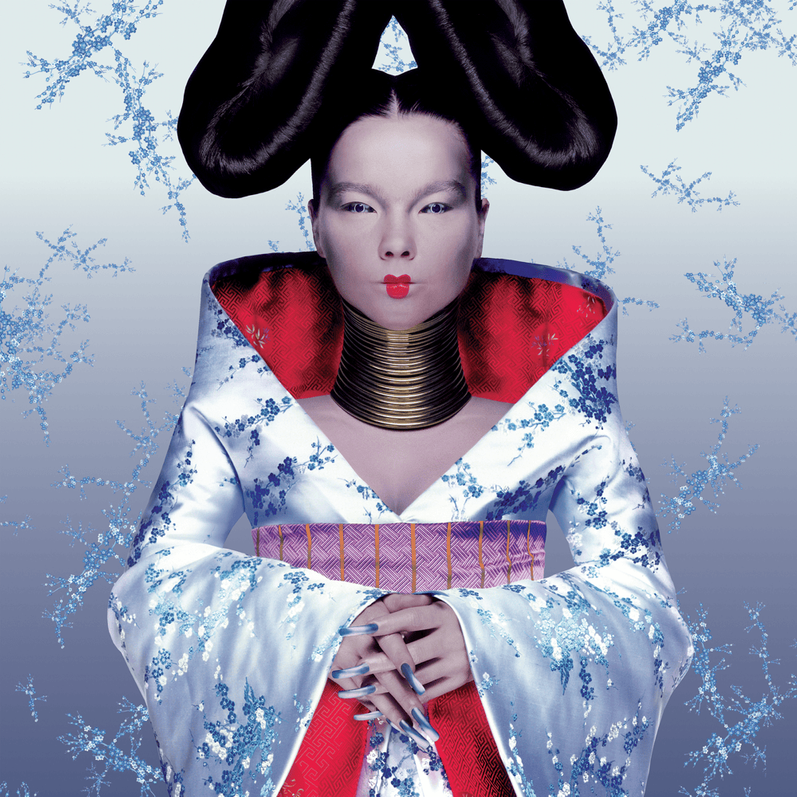
Album cover courtesy of One Little Indian Records
Björk is at the top of my list of artists who I should probably be more acquainted with by now, but I’m just not. It felt like an undertaking, and everyone is always hyping up Björk as an artist who, as a music fan, you’re supposed to love. That’s always a bit off-putting. It was also paired with the “She’s so quirky and Icelandic!”-chat, which I find very off-putting. I’ll be venturing into her art with an open mind – it’s not her fault that people are annoying about her.
When Björk was a kid, her mother became a hippie and decided to move herself and Björk into a commune. Björk said, “Can you imagine being brought up by seven grown-ups who all hate work, and all they want to do is play games with you all day long, and tell you four-hour-long stories, and make kites?” So she did what every kid does: she rebelled. Except for her, rebelling meant becoming very disciplined in training in classical music, playing the piano and the flute. She also got a record deal as a child, and released her first album at 11.
Right at the very beginning of listening to Homogenic, I realise that I’ve been a hater. I thought I’d listen to the album while I’m writing, but that was a mistake. I had to go lay down to listen to it. It’s not a casual listening experience at all — it’s layered, vivid and tactile, physical to the point where it’s almost uncomfortable to listen to, but in a very pleasant way. The electronic music meshing with her background in classical music and her emotive vocals makes the whole album sound electric.
Homogenic is Bjork’s fourth studio album, with the name referring not to the music, but the state she was in at the time, saying “This is more like one flavor. Me in one state of mind. One period of obsessions. That’s why I called it Homogenic.” The striking album cover was designed by Alexander McQueen and features Björk in McQueen’s signature style of women as fighters and survivors, with Björk saying that the photo depicts a “warrior of love.”
The album came from a dark time in Björk’s life, as her relationship and a stalker had tried to kill her by mailing her a bomb. But while the album is laden with heavy emotion, it’s still more defiant than anything. It seems like an album that’s made for healing both Björk and the listener. In one of the songs, “Alarm Call”, she says she wants to go to the top of a mountain and play a joyous song for people and free them from their suffering. In another, she says "I'll heal you/ With a razorblade/ I'll cut a slit open/ And the luminous beam feeds you".
I went to a concert the other night and I told my pal I just want to meditate while someone bangs those big, fat cymbals together behind my back as a surprise, I feel like something inside me would click into place. That’s what I feel that this album did for me. It’s a 10/10. Unfortunately I have to admit it again: the hipsters were right. Björk is worth the hype, and then some.